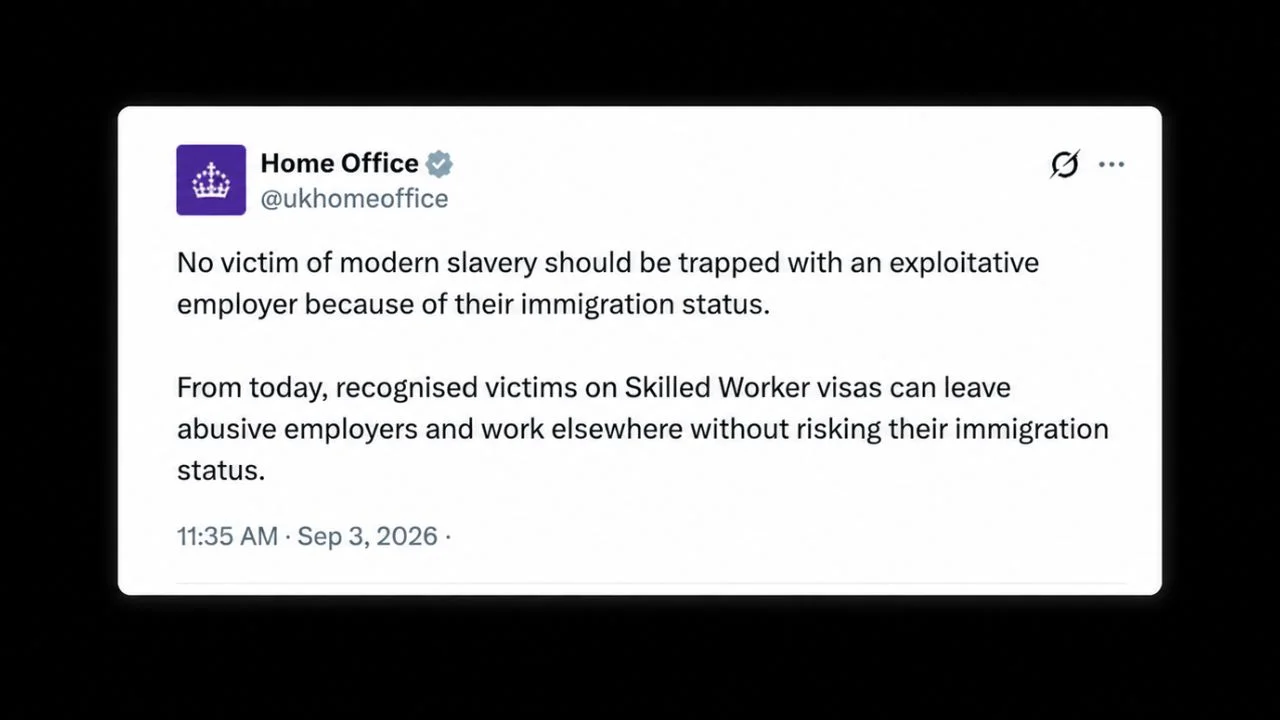



The Home Office has confirmed on X that from 1 October 2026, employers caught hiring illegal workers as food delivery drivers or construction workers will face fines of up to £60,000 per illegal worker or five years in prison. That date is today.
From today, employers caught hiring illegal delivery riders or other zero-hours workers could face £60,000 per worker fines, director disqualification or up to five years in prison.
Businesses are required to check that anyone working in their name is eligible to work in the…— Home Office (@ukhomeoffice) October 1, 2026
For the first time, businesses in the gig economy are legally required to check that the people working for them have the right to work in the UK. When it announced the crackdown, the Home Office named construction, food delivery, beauty salons and courier services as sectors the change will cover.
What has changed?
Section 48 of the Border Security, Asylum and Immigration Act 2025 extends the prohibition on illegal working to other working arrangements. The Commencement No. 4 Regulations 2026 bring it into force on 1 October 2026.
Until now, the duty to carry out right to work checks applied to people employed under a contract of employment. The Home Office's updated Employer's guide to right to work checks confirms that from today, the scheme also covers people working:
under a worker's contract
as individual sub-contractors
through an online matching service that provides details of individual service providers to clients or customers
The Home Office has described this as bringing businesses that hire gig economy and zero-hours workers into the right to work scheme.
Not every self-employed person is covered. The guide gives the example of a self-employed plumber who advertises directly to the public and gets work from multiple customers. No right to work check is required in that case, because the plumber is running an independent business. The guide also says that whether the scheme applies depends on the facts of each arrangement and how it works in practice.
The major delivery platforms, Deliveroo, Just Eat and Uber Eats, had already introduced identity and right to work checks on a voluntary basis. These checks are now a legal requirement for every business in scope.
Liability through the contractual chain
The changes also bring in "extended liability". Where work or services are provided through a contractual chain, a business may be treated as the employer of an individual it did not engage directly, and may be liable for a civil penalty. The guide makes clear this does not mean every organisation in a chain is automatically liable.
To establish a statutory excuse where extended liability applies, a business must have a written statement setting out the required contractual terms. According to the guide, relying on similar wording elsewhere in existing contracts is not enough, and existing vendor onboarding processes cannot replace the written statement.
Timing matters here:
For workers, individual sub-contractors and online matching services, a civil penalty can only be imposed where the work started on or after 1 October 2026.
The extended liability requirements apply to contractual arrangements entered into on or after 1 October 2026.
What are the penalties?
Under the Home Office guidance, an employer found employing someone illegally without having carried out the prescribed checks may face:
a civil penalty of up to £60,000 per illegal worker
in serious cases, a criminal conviction carrying up to five years in prison and an unlimited fine
closure of the business and a compliance order issued by the court
disqualification as a director
not being able to sponsor migrants
seizure of earnings made from illegal working
Under the Home Office's code of practice on preventing illegal working, the starting point for a civil penalty is £45,000 per worker for a first breach and £60,000 per worker for a repeat breach.
The criminal offence, under section 21 of the Immigration, Asylum and Nationality Act 2006, applies where an employer knows, or has reasonable cause to believe, that they are employing an illegal worker.
What this means for sponsor licence holders
Sponsor licence holders must already check and keep evidence of immigration status for every worker they sponsor, as part of their sponsor duties. The guide confirms this applies whether or not the arrangement falls within the extended scheme.
But the new rules reach further than sponsored staff. If your business also engages workers, sub-contractors or platform-based service providers, those people may now need checks too. And as the list above shows, one of the sanctions for illegal working is not being able to sponsor migrants.
If you hold a sponsor licence, now is the time to make sure your right to work process covers everyone in scope, not only your sponsored workers.
How to protect your business
A correct right to work check, carried out before work starts, gives you a statutory excuse against a civil penalty. But if you know someone is not allowed to do the work, you will not have a statutory excuse, even if you carried out checks.
If you are not sure who in your workforce now falls within the scheme, our team can carry out a compliance audit of your right to work and sponsor compliance processes.
Also Read
Need help with right to work compliance?
Don't wait for the Home Office to come knocking. Be proactive. Be prepared.
If you're unsure how the new right to work rules apply to your business, NARA Solicitors is here to help. Our team of experienced solicitors is ready to provide the guidance and support you need.
Book a consultation with NARA Solicitors today.
This article is for general information only and does not constitute legal advice. It reflects the law and Home Office guidance in force on 1 October 2026.