
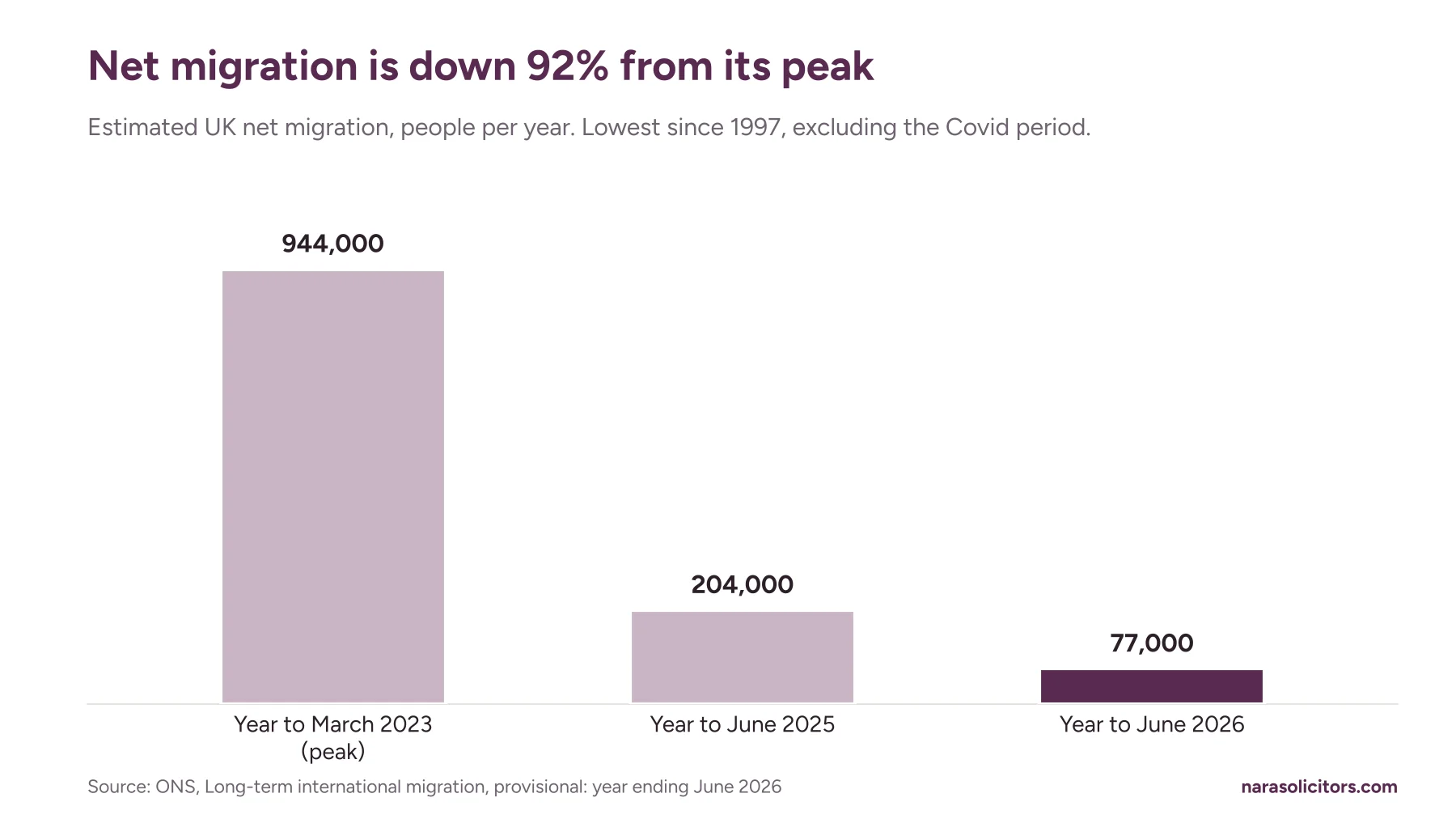
Net migration to the UK fell to an estimated 77,000 in the year to June 2026, the Office for National Statistics (ONS) said on 26 November.
That is down from 204,000 a year earlier. Leaving out the Covid years, the ONS says it is the lowest estimate since 1997.
The Home Office published its quarterly immigration figures the same morning. They show fewer asylum claims, fewer work and study visas, and a record number of citizenship applications.
What the ONS figures show
Net migration is the number of people moving to the UK for at least 12 months, minus the number leaving. In the year to June 2026, 738,000 people arrived and 661,000 left.
Immigration fell 17% from 893,000. Emigration was broadly stable, so almost all of the drop comes from fewer people arriving.
Net migration peaked at 944,000 in the year to March 2023. The new figure is 92% below that, and the lowest in almost 30 years once the Covid period is set aside.
Fewer people are coming to work and study
The fall is mostly among non-EU nationals. About 550,000 arrived in the year to June 2026, compared with 671,000 the year before.
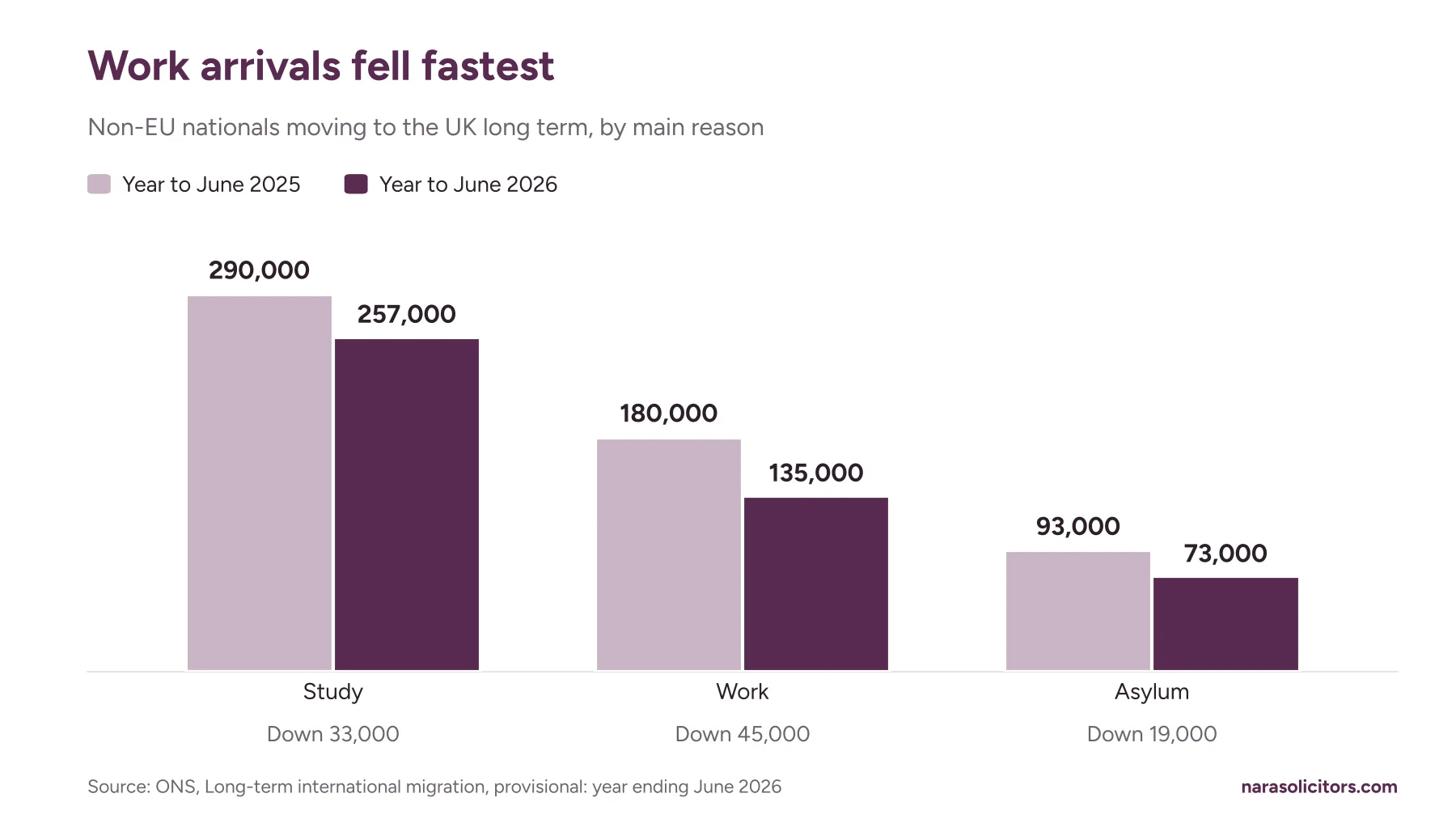
Work was the reason for about 135,000 of those arrivals, down 25%. Main applicants fell 30% to 60,000 and their dependants fell 21% to 75,000.
Study arrivals fell 11% to 257,000. Study is still the most common reason non-EU nationals move to the UK.
Home Office visa data points the same way. In the year to September 2026, Skilled Worker visa grants fell 27% to 57,000 and Health and Care Worker grants fell 44% to 31,000, the Home Office summary shows. Sponsored study visas fell 23% to 336,000.
Asylum claims are down by a third
Around 74,000 people claimed asylum in the year to September 2026, 33% fewer than the year before. Small boat arrivals fell 42% to 27,000.
The grant rate at initial decision was 38%, the lowest since 2018. The number of people waiting for an initial decision almost halved to 41,000.
About 13,000 asylum seekers were living in hotels at the end of September, down 64% in a year. Enforced and voluntary returns rose 7% to 41,100.
More British and EU nationals left than arrived
An estimated 245,000 British nationals left the UK and 109,000 came back. Among EU nationals, 79,000 arrived and 124,000 left.
The ONS says all of these figures are provisional and may be revised. It adds that the British estimates carry more uncertainty than the rest.
How ministers and researchers responded
Home Secretary Shabana Mahmood said the government had "restored control" and pointed to the 92% fall from the peak.
Shadow home secretary Chris Philp said the fall was mainly the result of changes made by the last Conservative government. He called for a legally binding annual cap set by Parliament.
Dr Ben Brindle of the University of Oxford's Migration Observatory said the drop is unlikely to last. He said the mix of people arriving matters more than the total, and that fewer skilled work visas will carry a cost to the public finances.
If you are an employer with a sponsor licence, or you are planning your own route to settlement or citizenship, we can help you check where you stand. Book a consultation with Nara Solicitors.