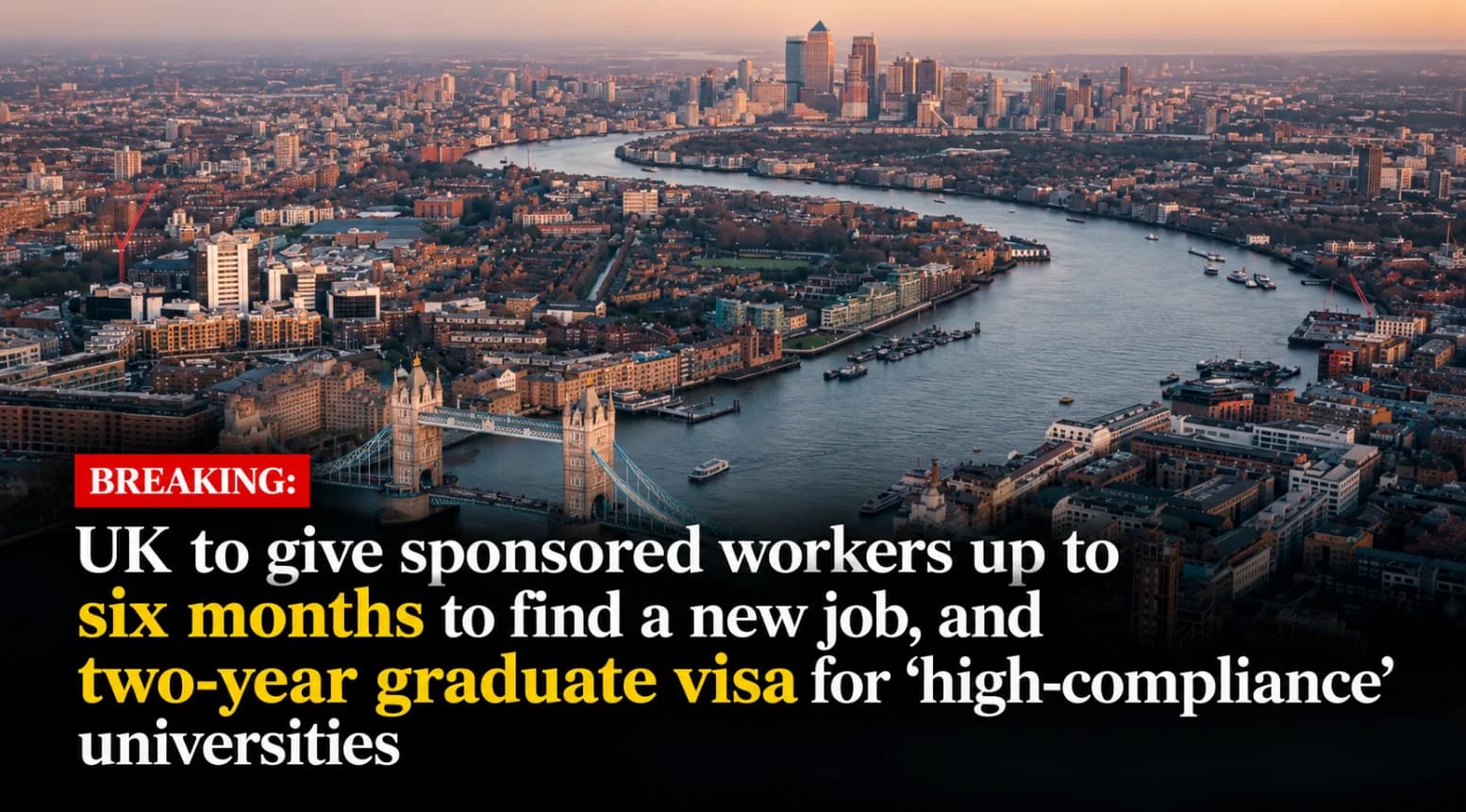

The UK government has announced major changes to its immigration system, introducing tougher rules for international students and skilled migrants. The measures were laid before Parliament today by Home Secretary Shabana Mahmood as part of a broader plan to make the system “controlled, selective and fair.”
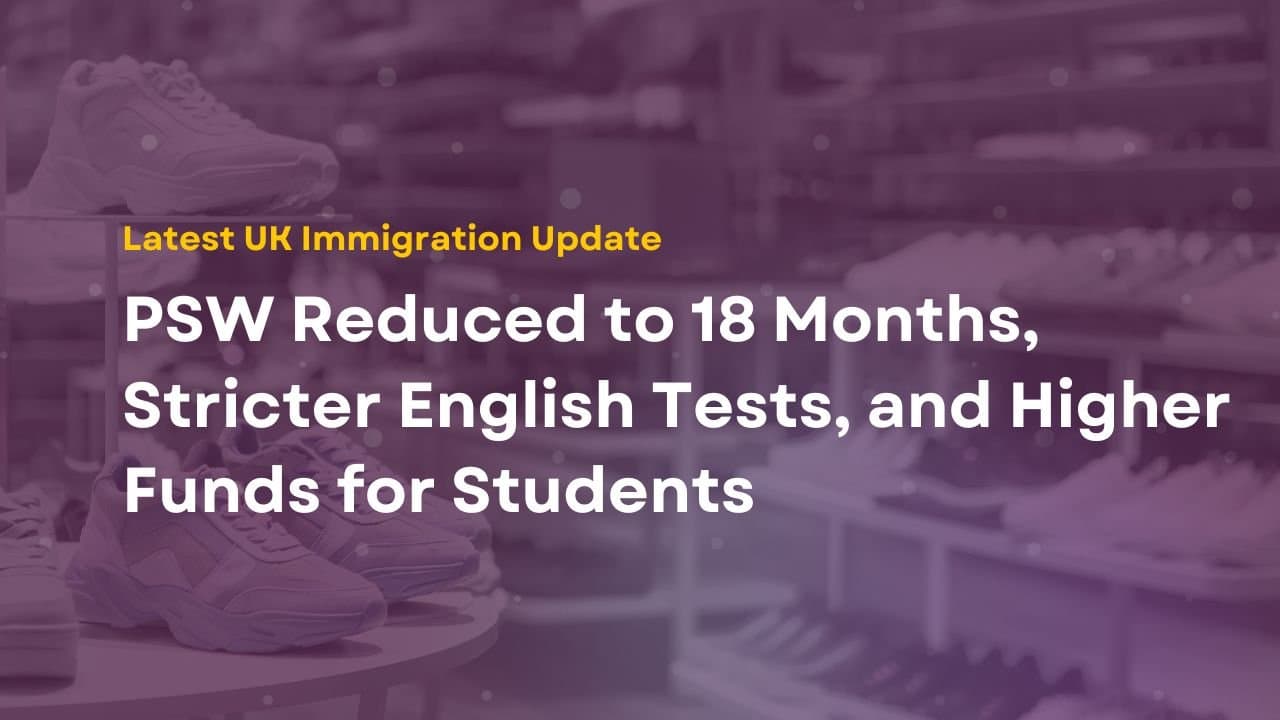
Graduate Route ( PSW Visa ) Reduced to 18 Months
From 1 January 2027, international graduates will have only 18 months to remain in the UK after completing their studies, reduced from the current two-year period.
The Home Office said data shows that many graduates had not transitioned into graduate-level employment as intended, leading to the decision to shorten the post-study stay. Students will therefore have a shorter timeframe to find eligible skilled work or switch to another visa route.
Stricter English Language Requirements
Migrants applying through certain legal routes will now need to meet a new A-Level equivalent English language standard in speaking, listening, reading, and writing.
Tests must be taken through a Home Office-approved Secure English Language Test provider, and results will be verified as part of the visa process.
Home Secretary Shabana Mahmood said:
“It is unacceptable for migrants to come here without learning our language, unable to contribute to our national life. If you come to this country, you must learn our language and play your part.”
Higher Financial Requirements for Students
From the 2025–2026 academic year, international students will have to show higher maintenance funds when applying for a Student visa. This change means applicants will need to prove they have sufficient funds to cover living costs during their studies.
What’s Changing for Skilled Workers
Employers sponsoring overseas workers will see a 32% increase in the Immigration Skills Charge (ISC) — the fee businesses pay when issuing a Certificate of Sponsorship.
This is the first rise since 2017 and is intended to fund investment in training UK-based workers and to reduce long-term reliance on overseas recruitment.
Other Immigration Updates
The announcement also confirmed several broader reforms under the government’s Plan for Change and Immigration White Paper, including:
-
Expansion of the High Potential Individual (HPI) route to graduates from the top 100 international universities, with the annual cap doubling to 8,000.
-
A new pathway allowing international entrepreneurs to move from a student visa to the Innovator Founder route.
-
Enhancements to the Global Talent route, widening eligibility for leading professionals in research, design, and the creative industries.
What This Means for Students and Skilled Workers
The government is tightening both student and work routes under its immigration reform plan. International students face shorter post-study options and higher funding thresholds, while employers will bear higher sponsorship costs.
Both groups should review their visa strategies early to stay compliant and make informed decisions about future applications.
Expert Guidance from Nara Solicitors
If you are an international student, graduate, or employer sponsoring overseas workers, our immigration specialists can help you understand how these new changes affect your plans.
Book a consultation now