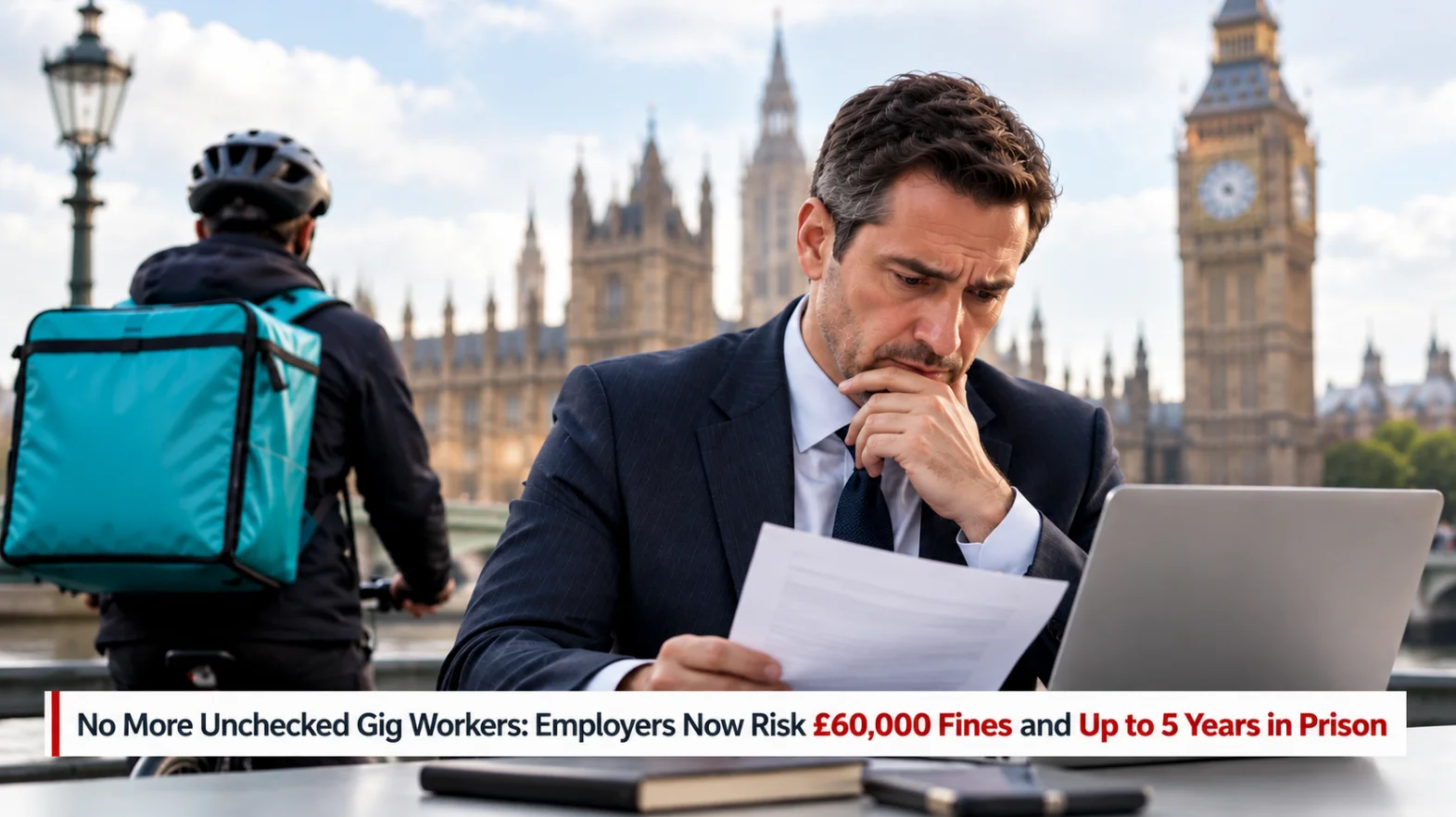


For years, one line has kept a lot of businesses comfortable. "They are not our employees, so the checks are not our problem." From 1 October 2026, that line stops working.
The government is extending the right to work regime beyond traditional employees. The change comes in under the Border Security, Asylum and Immigration Act 2025, and it brings a large part of the flexible workforce into scope for the first time. For anyone who holds a sponsor licence, the stakes are higher than for most, because right to work compliance is already tied directly to your licence.
What is actually changing
Today, the legal duty to run a right to work check applies to people engaged under a contract of employment. Self employed contractors, agency staff, zero hours workers and gig economy riders sit outside the scheme. That gap is what the new rules close.
From 1 October 2026, the requirement extends to businesses that engage:
workers on a worker's contract, including zero hours and casual staff
individual subcontractors
individuals sourced through online matching platforms
The sectors most affected are the ones that rely on flexible labour: construction, food delivery, courier services, warehousing and beauty. The civil and criminal sanctions that already apply to illegal working will now apply in these arrangements too.
The government's reasoning is straightforward. It treats illegal working as a driver of unlawful migration and a route to worker exploitation, and it says the current gap lets rogue employers undercut businesses that follow the rules. Closing that gap is the point of the change.
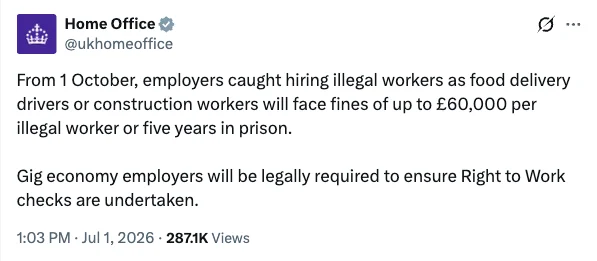
The penalties are the same ones employers of traditional staff already face. Get it wrong and you can face:
a civil penalty of up to £60,000 per illegal worker
closure of your business
disqualification as a director
up to five years in prison for knowingly employing someone with no right to work
Enforcement is not slowing down. Between October 2024 and September 2025, Immigration Enforcement carried out around 11,000 raids and made more than 8,000 arrests, up 51% and 63% on the year before. If your workforce now includes contractors or platform staff, that activity points at you as well.
Who carries the risk?
This is where many businesses will need to rethink. Plenty of organisations have relied on an agency or labour provider to run the checks, and assumed the risk sat with the supplier. That assumption is getting harder to defend.
A correctly conducted check is what gives you a statutory excuse, the legal defence against a civil penalty. The catch is that the excuse belongs to the party that carries out the check properly. Relying on a third party's word does not always pass that protection on to you. The safest position is the one careful employers are already moving towards. Trust the agency, but verify. Keep visibility over the checks being done in your name, and build the right to see evidence on demand into your contracts with agencies and platforms.
Why sponsor licence holders face a double risk
If you hold a sponsor licence, this is not just another compliance task. Right to work checks are a core sponsor duty. A failure does not only expose you to a civil penalty. It can trigger action against your licence, including suspension, downgrade or revocation.
That is the double exposure ordinary employers do not have. The Home Office has also tightened its sponsor guidance so the duty to check reaches the individuals you directly engage, not only those on your payroll. If you use subcontractors or agency staff alongside your sponsored workforce, your compliance map has just grown.
One point that often gets missed. The rules cut both ways. Checking foreign national workers but not their UK born colleagues, or applying extra scrutiny based on someone's nationality, can create discrimination claims of its own. The answer is consistency. Apply the same check, the same way, to everyone.
Checks are going digital
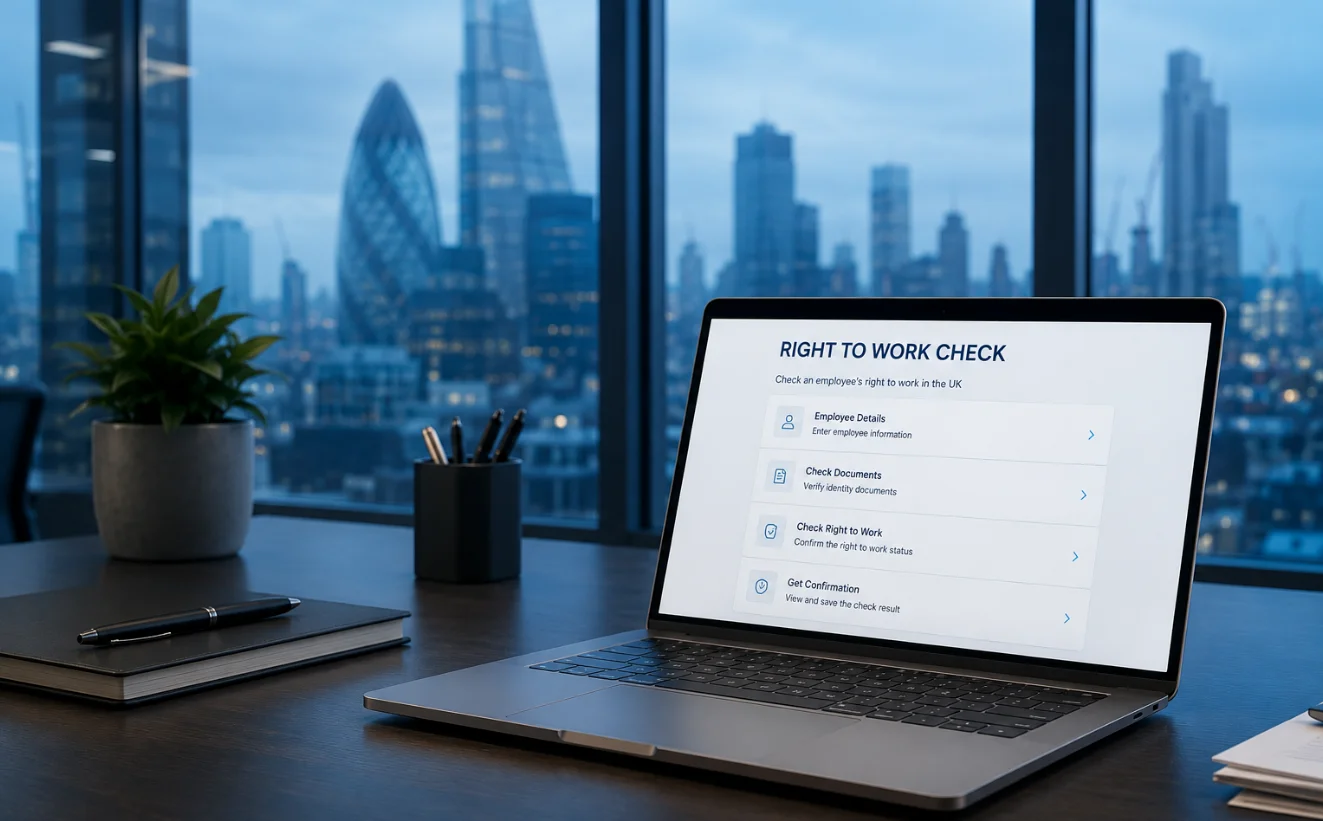
The way checks are done is changing too. There are three permitted routes: a manual document check, the Home Office online service, or a certified digital verification service. On top of this, the government has confirmed it is introducing digital ID, which will be mandatory to prove the right to work. The aim is a simpler and more consistent check, and one that is harder to dodge with forged documents. It is designed to cover these new gig economy checks as well, so it is worth getting your teams comfortable with digital checks now rather than at the deadline.
What to do before October
You have time, but not a lot. Sensible steps now:
Map your workforce. Separate employees, workers, subcontractors and platform staff, and work out who will fall in scope.
Audit your current checks and records for gaps and missing dates.
Review agency and platform contracts so responsibility is clear and you can request evidence.
Learn the three permitted routes: a manual document check, the Home Office online service, or a certified digital verification service.
Train everyone involved in hiring, and diarise repeat checks for time limited status.
If you hold a sponsor licence, this is a good moment to run a full compliance audit before the deadline, rather than after an unannounced visit. It is far cheaper to fix a gap on your own terms than under enforcement pressure.
How we can help
At NARA Solicitors, we help businesses stay on the right side of their right to work and sponsor duties. That includes mapping your workforce against the new rules, reviewing your onboarding and record keeping, and dealing with the Home Office if a problem has already surfaced. If you are unsure how the October changes affect the way you engage staff, we can give you a clear answer before it becomes a penalty.
Do not wait for the Home Office to come knocking. Be proactive. Be prepared.
Book a consultation with NARA Solicitors today.